The Real-Time
Control Plane
Turn industrial feedback into rules-based autonomy.
Connects actual production to rules and event automation for immediate action.
See How It WorksFrom Production Visibility to Authorized Action
Flexxbotics Control Plane, called FlexxControl in the Flexxbotics Platform, is the industrial software layer that uses actual production context to recognize risks and apply human approved actions before failures occur.
Enforces How Production Autonomy Runs
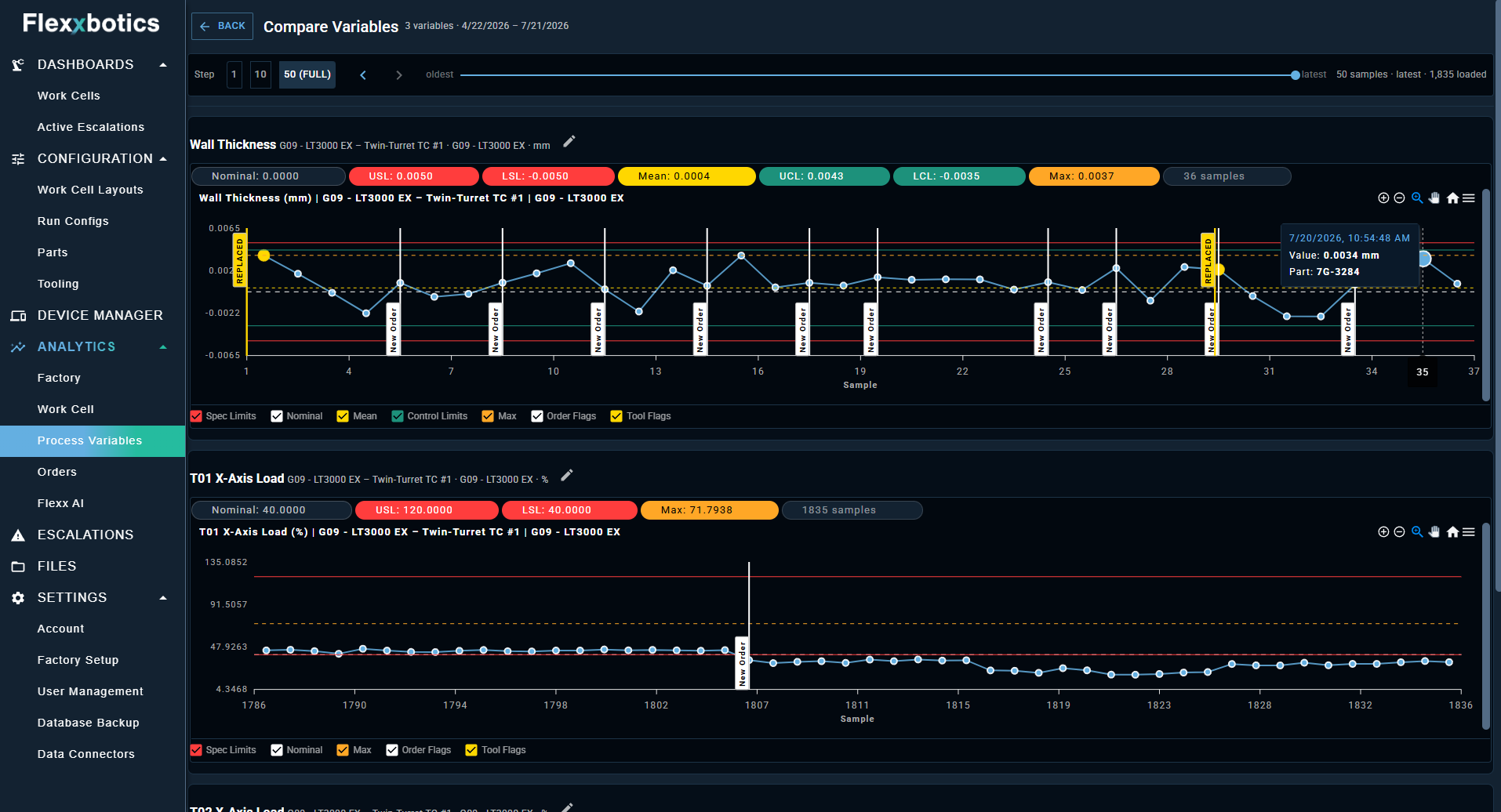
The Control Plane applies operating rules to real-time production feedback to detect process deviations, identify downtime signals, trigger escalations, and invoke authorized actions.
It provides the operating foundation for autonomous process control, traceability, prescriptive optimization, and AI-assisted production decisions with human-in-the-loop oversight.
Control Decisions Before Action Happens
You need complete control and traceability over production decisions that occur in your factories as you introduce greater manufacturing autonomy and AI. Flexxbotics gives your teams the ability to detect, correct, and act using real-time feedback from actual production.
Works with Your Factory Systems
Flexxbotics does not replace MES, SCADA, PLCs, or machine controllers. It works with them to securely coordinate real-time decisions and actions using data from those systems for closed-loop operations.
More Than Alarms. The Ability to Act.
01
Detects
Finds deviation trends, anomalies, risks, and process drift in real time.
02
Corrects
Triggers escalations, approvals, variable updates, and recommended corrections.
03
Acts
Executes authorized actions, captures every event, and feeds results back to improve control.
01
Detects
Flexxbotics provides a single digital control plane which unifies our plant floor operations.
Rick Newell
Director of Advanced Manufacturing Technology & Innovation
How the Control Plane Works
Production Definition
Combines part specifications, routings, and assets for run instructions.
Operating Rules
Governs variable targets, limits, and conditionals for process control.
Automation Engine
Recognizes event patterns, calculates adjustments, and applies human approved updates.
Compliance Traceability
Records and stores all values, events, calculations, and actions undertaken.
Human-in-the-Loop Control
Defines where approval is required and where automation can act with oversight.
Built for Enterprise-Scale Operations
Synchronized Edge Architecture
Single data model with bi-directional state sync between the control plane and every edge node.
Centralized Management
Controls version deployment, monitoring, and health of drivers and edge software.
Scalability & Redundancy
Enterprise-class high availability, redundancy, and failover readiness for operational continuity.
Control Room Dashboards
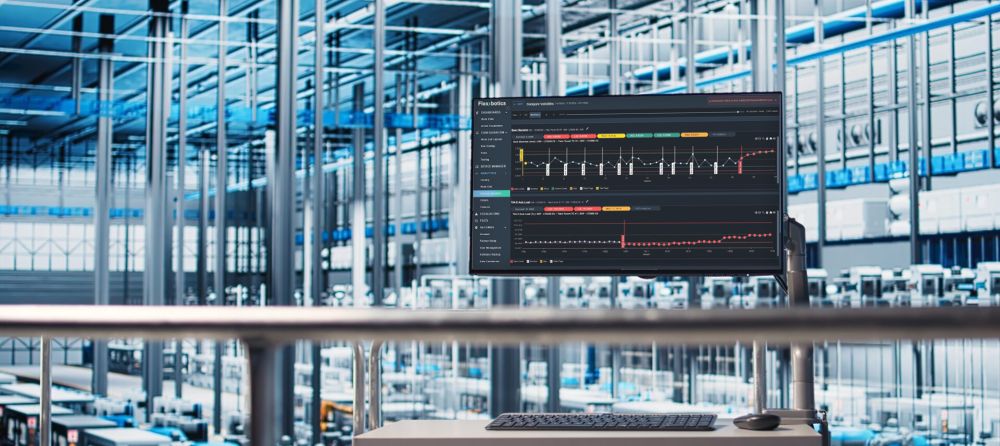
Gives teams real-time visibility into actual production activity, output, and work stops.
Analytics & Reports
Turns production actuals and downtime events into operational and executive insights.
Intelligence Applications
Options for AI assistance, prediction, prevention, and factory optimization.
Access Control
Sets user access, roles, and permissions and includes single sign-on (SSO) option.
Networking & Security
Configuration settings define networking, clustering, load balancing, and secure infrastructure.
Administration & REST API
Administration capabilities establish profiles, behaviors, and enterprise application interfacing.
Secure IT/OT Compatibility
Flexxbotics Control Plane works securely with your existing data infrastructure and systems in your factories.
- Unified Namespace (UNS), industrial ontologies, message brokers, and data historians
- ERP, MES, SCADA, IIoT, and other systems
Flexxbotics Control Plane deploys on your servers, our cloud, or GovCloud.
Frequently Asked Questions
What is a real-time control plane, and why is it needed?
A real-time control plane is a software layer that governs operating rules, event detection, and authorized actions across factory operations. The Flexxbotics Control Plane connects ongoing production feedback to decisions and controlled actions, enabling closed-loop manufacturing without replacing existing MES, SCADA, UNS, PLCs, or machine controllers.
How is Flexxbotics different from an industrial data platform?
Flexxbotics extends industrial data platform capabilities beyond data acquisition, normalization, and tag-based contextualization to enable process characterization and autonomous process control. Its platform captures detailed production signals, creates AI-ready data streams, establishes process baselines and operating limits, and detects deviations. The Control Plane connects real-time production feedback to event automation and authorized actions across plant operations.
How is Flexxbotics different from Unified Namespace (UNS) systems?
A Unified Namespace (UNS) provides a shared data architecture for exchanging industrial information across factory systems. Flexxbotics works within an existing UNS architecture or can be used as the UNS itself. Flexxbotics then captures protocol-level production data, normalizes and contextualizes it at the source, and enables closed-loop operations. Unlike a UNS alone, Flexxbotics connects production feedback to operating rules and authorized actions for autonomous process control.
Can Flexxbotics support multi-site manufacturing operations?
Yes. Flexxbotics supports manufacturing operations across production lines, workcells, and plants at multiple sites. Its synchronized edge architecture uses a single data model with bidirectional state synchronization between the Control Plane and edge nodes. Centralized management supports driver deployment, software versions, monitoring, and production oversight across locations.
Flexxbotics Control Plane, called FlexxControl in the Flexxbotics Platform, is the enterprise software layer that uses actual production context, operating rules, and conditionals to detect process deviations, identify downtime risks, and trigger human authorized production actions.
Govern Production at Enterprise Scale
Control the decisions and actions that resolve production issues.