How to automate your CNCs with robots – When undertaking a robotic machine tending initiative there are numerous factory-dependent and project-specific considerations that must be taken into account. Identifying which requirements are relevant to an initiative and to what extent is
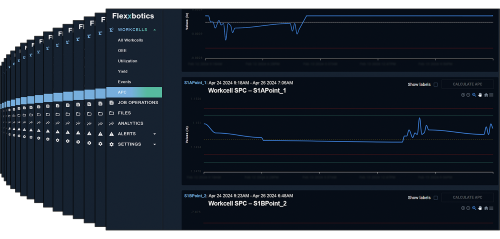
Over the last couple of week’s, I’ve highlighted some of the new functionality added in the latest release of our Flexxbotics solution for robot-driven manufacturing including multi-factory power and in-line quality
Some of the other functionality that I’m excited about is the expansion of our in-line inspection capabilities, which use automated inspection results to drive real-time updates to off-sets in CNC machining programs which
Included in the release are several new and expanded capabilities that the team has been working on to further enhance our solution such as multi-factory power, expanded in-line inspection functionality, more IT business system
I had the pleasure of sitting down with Kristian McCann at IoT Insider for a Q&A recently to discuss the role of robotics in Industry 4.0 and 5.0, applications of robots in factories and some of the challenges in
We’re pleased to announce that Scott Harris, co-founder of SOLIDWORKS and Onshape, has invested in Flexxbotics. Scott has been an advisor and mentor to me for a number of years as we’ve been scaling up Flexx. This investment marks



Recent Comments