Flexxbotics Blog
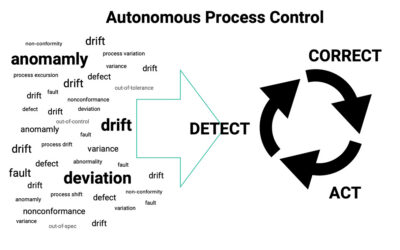
Autonomous Process Control in Factory Automation Architecture
Many of the concepts discussed in this post are drawn from techniques established in semiconductor fabrication for decades called advanced process control. Taking these foundational methods, applying them across manufacturing for all industries, and extending them to modern smart factory environments, whether using AI or not, is
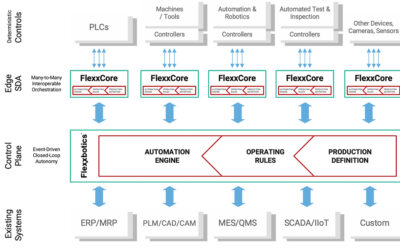
AI-Ready Factory Automation Architecture for Autonomy
As AI adoption continues to grow, the challenge shifts from experimentation to safe and consistent operationalization in production environments. Controls engineers and industrial technologists are increasingly under pressure. The issue is the factory automation architecture required to support AI in production.
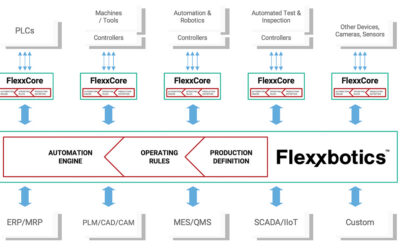
Scalable Factory Automation Architecture for Greater Autonomy
As factories mature their automation installations, the challenge shifts from automating individual machines and cells to scaling the automation architecture for autonomy across lines, plants, and changing production requirements. Controls engineers, automation engineers, and manufacturing technologists are increasingly expected to:

Factory Data, Context, and Closed-Loop Autonomy
As factories become data-rich, the challenge shifts to acting on that data in real time with consistency and control. Automation and controls engineers have spent years instrumenting factories with: Sensors and machine signals, SCADA, historians, and IIoT, ERP, MES, QMS, and other factory systems. The gap is not visibility, the gap is closed-loop execution in production.
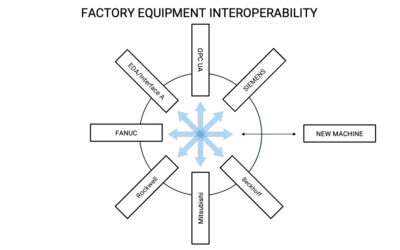
Interoperable Orchestration in Factory Automation Architecture
Every modern factory connects machines, what engineers struggle with is coordinating them at scale. Automation and controls engineers are increasingly asked to deliver systems where factory machines and tools, automation, robots, test & inspection systems, and enterprise software operate as a cohesive production system, not isolated automation silos. Yet most factory
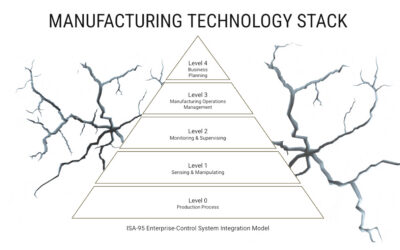
Factory Autonomy Architecture Foundations
Modern manufacturing systems are not lacking control, they are lacking architectural clarity at scale. Most factories have all of these components. What they don’t have is a coherent architectural model that defines how they should work together. This post answers four critical questions such as How do I structure my overall manufacturing automation architecture,
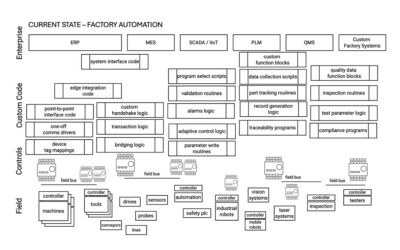
What are Hidden Scaling Problems in Factory Automation?
Hidden scaling problems often emerge when factory automation expands beyond a single cell to multiple lines or plants. This article explores why automation that performs well at the machine level becomes increasingly complex at scale—highlighting challenges with system architecture, integration, standardization, and maintainability across the factory environment.

Which PLC System Scales Best from Small Cells to Entire Plants?
When people ask “what scales best,” they’re rarely asking about CPU clock rate or memory. In practice, “scale” breaks on integration cost, data consistency, change management, and lifecycle governance – not on whether the PLC line has a bigger chassis. Most major PLC families can scale in raw I/O count or distributed
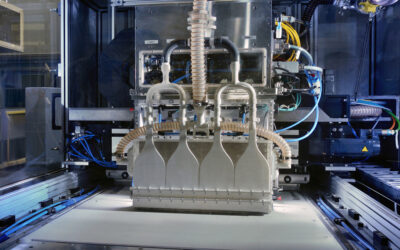
How Can Additive Manufacturing Realize the Promise of Production Scale?
Additive manufacturing (AM) has matured into a strategic production technology across defense, aerospace, medical devices, semiconductor packaging, and automotive. The engineering advantages are well established: complex geometries, lightweighting, part consolidation,
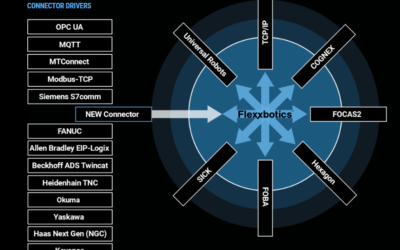
What are Flexxbotics Transformers?
In the Flexxbotics automation ecosystem, a Transformer is a software component (connector driver) that enables bi-directional, interoperable communication between machine controllers, robotic controllers, PLCs, and diverse factory automation, inspection equipment, or enterprise IT systems. Transformers are central to the
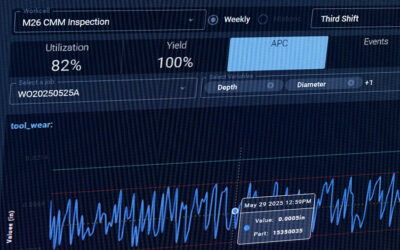
Why We Built a Software-Defined Automation Edge
After doing automation deployments for more than a decade, my frustration hit a breaking point. Not with automation itself – this industry is my life – but with how constrained, restricted, and outdated our tooling has become. Every deployment felt like fighting the same battles over and over again, even as factories demanded more
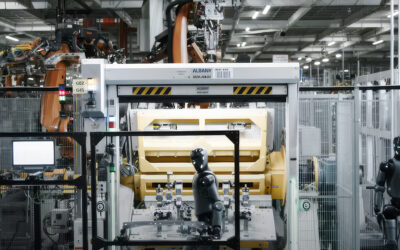
How will Humanoids Fit into Autonomous Manufacturing?
Recently I had the chance to sit down with Jack Hallewell from Humanoid Robotics Technology to talk about the role we see humanoids playing in manufacturing. At Flexxbotics, we’ve been exploring the role humanoids will play in factories, fabs, labs, and other production environments – and how our capabilities make that vision real.
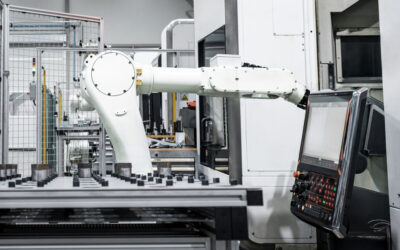
Why are Robotics Key to Reindustrialization?
While reshoring offers strategic benefits like shorter supply chains, improved IP protection, and reduced geopolitical risk, higher domestic labor costs and skills shortages remain major barriers. Automation, particularly advanced machine tending and
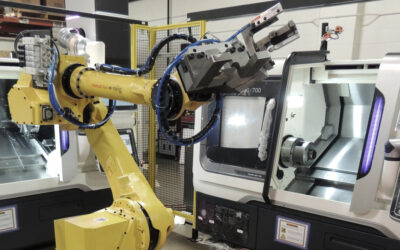
What are the Benefits of Autonomous Process Control?
Autonomous Process Control creates closed-loop autonomy between your machines making products, your inspection & test systems reviewing their work, and your robots. APC makes real-time robotic production processing adjustments based
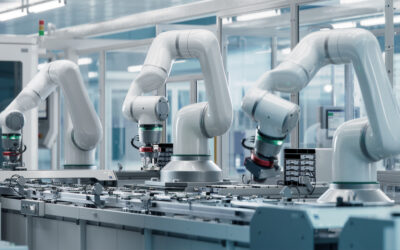
What is “Line Clear” and Why Should Your Automation Care?
Wanted to explain something important that most people don’t understand or fully consider when implementing advanced robotic machine tending for production in regulated industries; the topic is Line Clearance and how it relates to Production Changeovers when
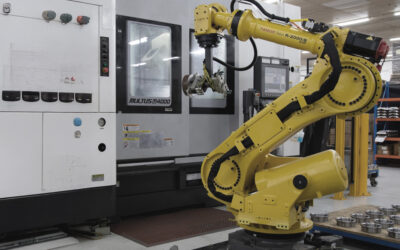
What is Autonomous Process Control in Advanced Manufacturing?
There are certain topics in advanced robotic machine tending that are critical to understand in order to achieve “lights out” manufacturing. In today’s post, I want to briefly cover one of the most critical for successful production robotic

What is Lights Out Manufacturing? | AI Explainer
The latest episode explains how “lights-out” manufacturing is highly autonomous production where robots and automated machinery perform work without human intervention. The approach utilizes robotic systems in combination with factory equipment and robotic
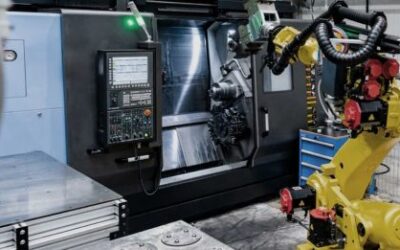
Why Factory Robotics Must Work for Everyone and How It’s Happening Now
Sadly, most robot projects fail because they rely on custom, one-off software technology – especially in industries like medical devices, aerospace, and defense, where installations often become overly complex science projects.
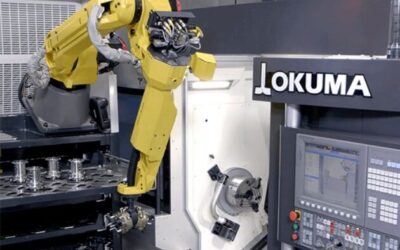
What are Common Challenges in Robotic Machine Tending?
Automating machine tending with robots in your factory provides a wide range of benefits from longer unattended runs and greater capacity to increased profit per part. However, robotic automation presents certain challenges that are not always obvious. These include interfacing between the robots and CNCs and other machines, managing multi-machine operations, and
What is Industry 4.0? | AI Explainer
Industry 4.0 – the fourth industrial revolution – represents a significant shift in manufacturing through the use of smart factory technologies. Key components include robotic automation, industrial internet connectivity using open standards, and six sigma levels of process control for ‘lights out’ production. The overarching goal is
What is Autonomous Manufacturing? | AI Explainer
Autonomous Manufacturing is automated, self-governing smart factory operations, a key element of Industry 4.0, which uses robots and robotic production software digitalization along with existing systems to optimize production with minimal human involvement. Achieving autonomous manufacturing requires attaining autonomy in production process control and
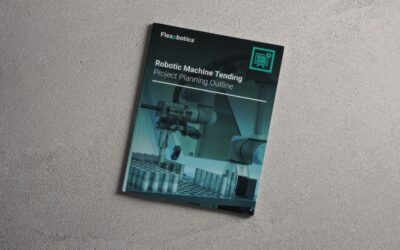
15 Point Project Planning Outline for Robot Machine Tending
The paper provides comprehensive info on the different aspects of a machine tending initiative using either cobots or industrial robots to achieve greater unattended operation, higher yields, and better margins. Included in the paper are several practical tools that’ll help successfully guide you through your factory’s robotic automation projects.
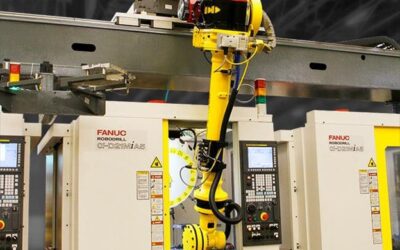
CNC Robot Machine Tending vs Advanced Robotic Machine Tending; What’s the Difference?
Today, I want to take look at the difference between basic CNC robot machine tending and Advanced Robotic Machine Tending. While there are a number of differences, the key distinction is that basic machine tending involves a single robot with one machine whereas advanced machine tending involves one or more robots
What is Autonomous Process Control? Flexxbotics | AI Explainer Podcast
Autonomous Process Control (APC) is a solution using robots and automated inspection to achieve high-precision, repeatable manufacturing without human intervention. Key components include industrial and collaborative robotics, automated inspection technologies, and standardized robotic
CNC Machine Tending Essentials – How to automate your CNCs with robots
How to automate your CNCs with robots – When undertaking a robotic machine tending initiative there are numerous factory-dependent and project-specific considerations that must be taken into account. Identifying which requirements are relevant to an initiative and to what extent is

Expanded Business Systems Integration & Analytics in Flexxbotics Solution
Over the last couple of week’s, I’ve highlighted some of the new functionality added in the latest release of our Flexxbotics solution for robot-driven manufacturing including multi-factory power and in-line quality
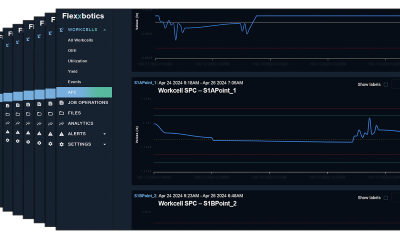
In-Line Quality Inspection Capabilities with Flexxbotics Solution
Some of the other functionality that I’m excited about is the expansion of our in-line inspection capabilities, which use automated inspection results to drive real-time updates to off-sets in CNC machining programs which
Flexxbotics Solution Scales for Multi-Factory Deployments
Included in the release are several new and expanded capabilities that the team has been working on to further enhance our solution such as multi-factory power, expanded in-line inspection functionality, more IT business system
Industry 4.0: the interoperability issues impeding robotics use in smart factories
I had the pleasure of sitting down with Kristian McCann at IoT Insider for a Q&A recently to discuss the role of robotics in Industry 4.0 and 5.0, applications of robots in factories and some of the challenges in

Scott Harris Makes New Investment in Flexxbotics
We’re pleased to announce that Scott Harris, co-founder of SOLIDWORKS and Onshape, has invested in Flexxbotics. Scott has been an advisor and mentor to me for a number of years as we’ve been scaling up Flexx. This investment marks

The rising demand for robotic machine tending
In this distributor insights video, Tim Anderson, Sales Director at Automation Inc. covers the rising demand for…

How to adopt flexible CNC automation
In this partner insights video, Mike DeGrace, UR+ Ecosystem Manager at Universal Robots covers adopting flexible CNC…

What makes for a successful automation project?
In this partner insights video, Anthony Gillespie, Territory Sales Manager at Schunk covers how CNC automation can overcome…

WPI Sponsorship
Flexxbotics was pleased to sponsor three students from Worcester Polytechnic Institute (WPI) for their senior year…

Adopting CNC Automation to Meet Demand Growth
In this customer spotlight video, Jackson Brining, Automation and Process Engineer at Machining Concepts talks about…
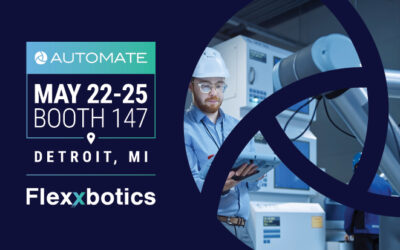
Automate 2023
Flexxbotics will showcase its FlexxTend™ complete robotic machine tending solution at Automate 2023 on May 22-25 in…
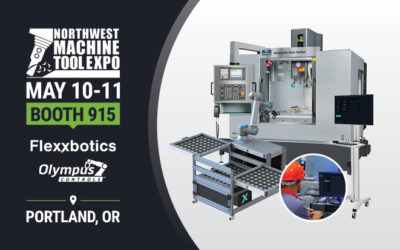
Northwest Machine Tool Expo 2023
Flexxbotics will exhibit at the upcoming Northwest Machine Tool Expo with our partner Olympus Controls on May…
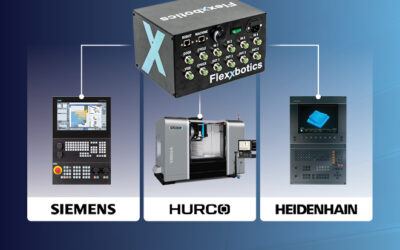
FlexxCNC™ Compatibility Expansion
Flexxbotics is excited to announce that we have expanded the functionality of our FlexxCNC™ cobot to CNC communications…
5 Tips For Hiring a CNC Machinist During a Labor Shortage
In today’s competitive job market, it is increasingly difficult to find skilled workers in certain industries. CNC machining is no….
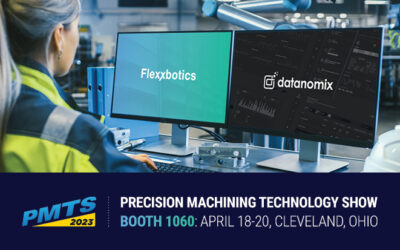
PMTS 2023
We’re looking forward to attending the Precision Machining Technology Show on Apr 18-20, 2023 at the Huntington…
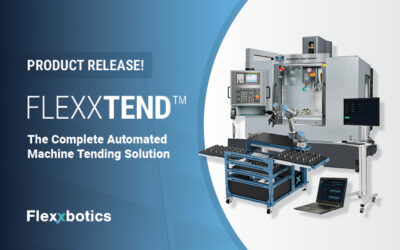
FlexxTend™ Product Launch
Flexxbotics announces the official launch of FlexxTend™, a turnkey automated machine tending solution for machine shops to…
Benefits to CNC Machine Tending Standardization
Standardizing your CNC machine tending interfaces can have several benefits for your manufacturing process. From improving…

Challenges with setting up a CNC machine tending workcell
In this partner insights video, Karl Ericsson, Managing Director at Svenska Elektrod AB, talks all things CNC machine
Flexxbotics Partners with CIMTEC Automation
Flexxbotics is excited to announce a new partnership with CIMTEC Automation, expanding our presence in VA, NC and…
Flexxbotics Partners with Morris South
Flexxbotics is pleased to announce a new partnership with Morris South to provide discrete manufacturers with robotic…
The Right Way To Get Real-Time Manufacturing Data
Data analytics is a vital tool for today’s leading manufacturers. The insights they gain allow them to operate smarter…

FlexxCNC™ Financial Justification
The first and most straightforward justification for a CNC to Robot interface is the time x cost savings tied to rapid…
What Is OEE & Why Has It Become The Gold Standard For…
Most modern manufacturers use Overall Equipment Effectiveness (OEE) as the gold standard for manufacturing process…
FlexxConnect™ UR Product Launch
Flexxbotics has today announced the launch of FlexxConnect™ UR, a continuous cobot improvement platform that empowers…
Flexxbotics Partners with Svenska Elektrod
Flexxbotics has today announced a new partnership with Svenska Elektrod, expanding our presence in Europe to…
Flexxbotics and WMH Robotics Partnership
Flexxbotics is excited to announce that we have teamed up with WMH Robotics to provide discrete manufacturers in….

Flexxbotics On The Gunn Show Podcast
Our CEO, Tyler Bouchard, appeared on a recent episode of the Gunn Show Podcast hosted by Tony Gunn. Greg McHale…
IMTS Trade Show
Flexxbotics will exhibit at the International Manufacturing Technology Show (IMTS) at McCormick Place, Chicago on…
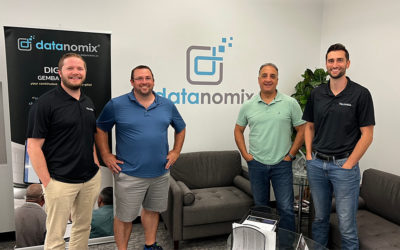
Datanomix Partner Announcement
Flexxbotics Partners with Datanomix to Provide Robot/CNC Real-Time Production Monitoring and Process Control…
RDS Case Study
RDS, located in Newport NH, is a high precision machine shop host to over 50 CNC machines and 25+ employees. They…

Cybersecurity Best Practices in Manufacturing
The speed of technological development in manufacturing means cybersecurity must constantly upgrade and adapt to handle…

Flexxbotics Expands To Meet Growing Demand
Flexxbotics is pleased to announce that we have expanded our commercial team to meet record demand and support our…
Robert E. Morris Company Automation Expo
We are pleased to announce that Flexxbotics will exhibit at the upcoming Robert E. Morris Company Automation Expo on August…
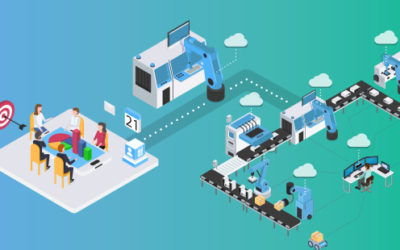
Pragmatic Digital Transformation
Conducting a digital transformation in your manufacturing company is one of the best methods for improving productivity…

Adams Partnership Announcement
Flexxbotics is excited to announce a new partnership with Adams, expanding our presence in Florida. Founded in 1960…
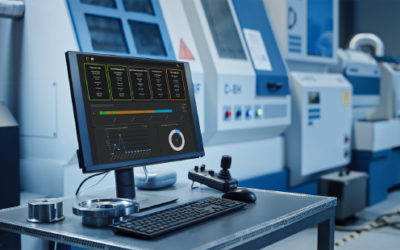
Optimizing Work Cell Management For Lean Manufacuring
A manufacturing work cell is a group of people and equipment that manufacture a product or part. This approach, also…
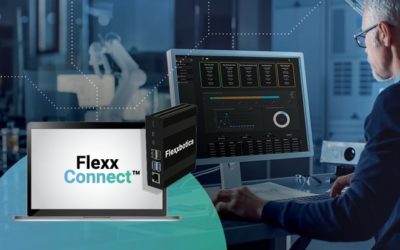
Flexxbotics Launches FlexxConnect™
Flexxbotics has announced the launch of FlexxConnect, a manufacturing work cell management platform that reduces…
Flexxbotics & Electromate Partnership
Flexxbotics partners with Electromate to expand presence and provide cobot productivity tools across Canada…